
Czech Modal Verbs Without Tears
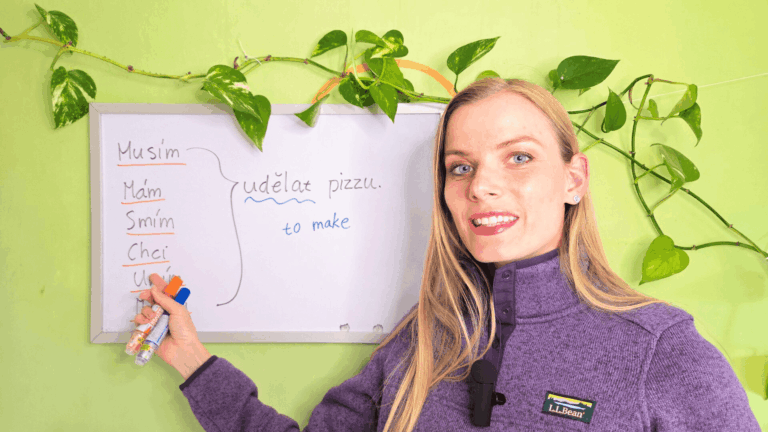
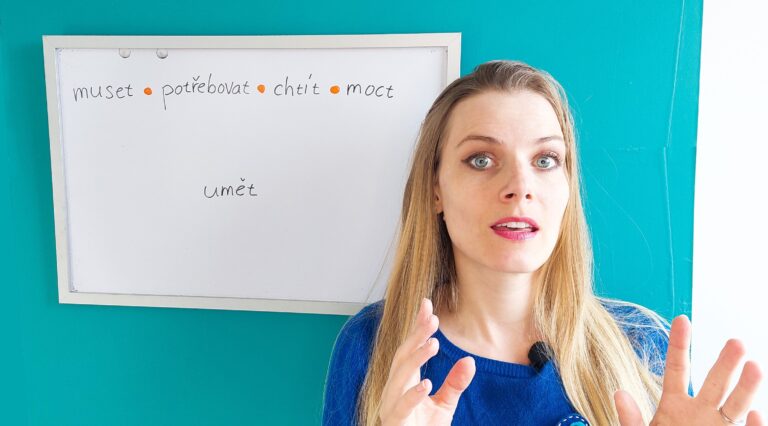
This blog post summarizes how to use the modal verbs muset, mít, smět, umět, chtít, and moct. You can practice all of them in a fun dialogue at the end!

This blog post summarizes how to use the modal verbs muset, mít, smět, umět, chtít, and moct. You can practice all of them in a fun dialogue at the end!

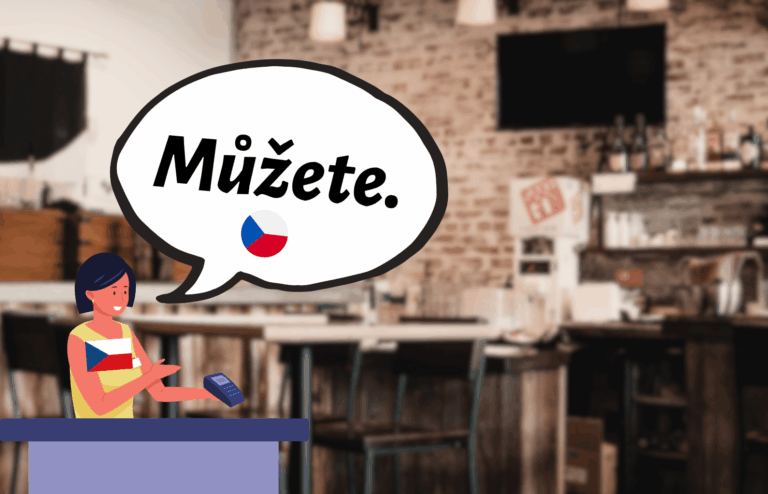
Imagine this: You’re at the café in the Czech Republic, ready to pay by card, and the server points to the terminal and says: “You can.” In English, this might sound a little odd—but in Czech, it makes perfect sense. In Czech, the server would say: “Můžete.” It simply means: You can (tap now) — the...

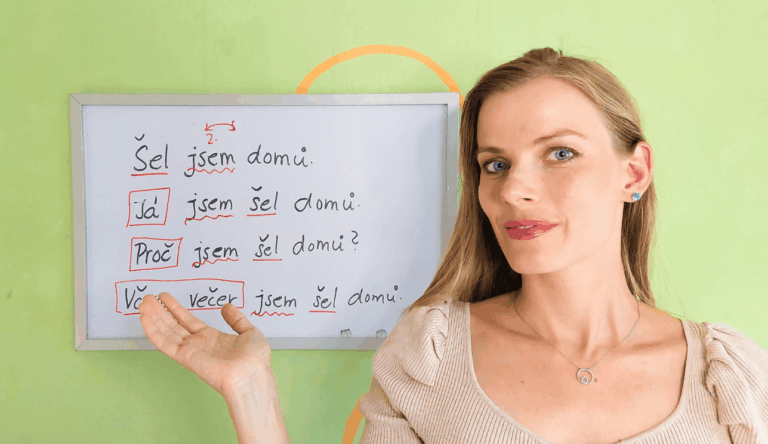
Czech word order is relatively free. – Have you heard this before? It is true if you focus on the word relatively. The word order in Czech is indeed quite flexible, but there are many rules that will keep you on your toes. One of those important things to keep in mind is the so-called...

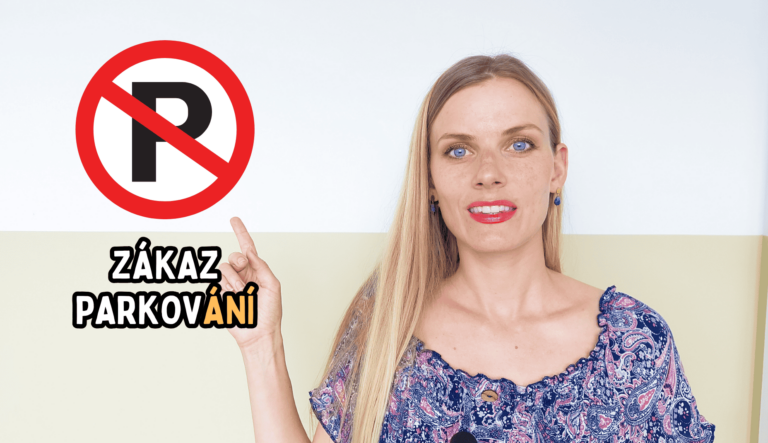
Have you noticed that there are quite a few words in Czech that end in -ání or -ení? For example, zákaz zastavení (no stopping), zákaz parkování (no parking), kouření zakázáno (smoking prohibited), mytí aut (car washing) or tisk fotografií na počkání (instant photo printing). These are the phrases you can find around you in a Czech-speaking environment. Check...

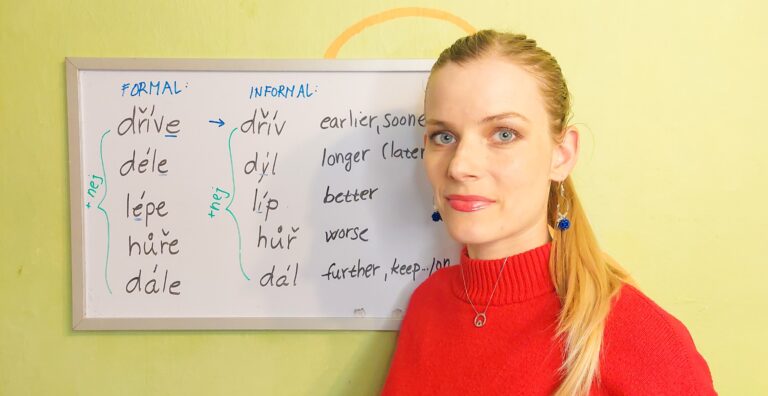
In Czech, some words have two forms with the same meaning. Sometimes the longer form is informal, while in other cases, it’s the shorter one that’s informal. Let’s take a look at the latter! The shorter forms of the words in this post are more common for spoken Czech. Let’s start with the adverbs. The following...

“Oh, it’s one of those verbs. I never know how to deal with them!” my student tells me as soon as we come across spadnout (to fall). It belongs to this peculiar category of verbs that learners seem to be a bit afraid of, maybe rightfully so. It’s confusing when it comes to their conjugation until you...

Translating “time” in Czech can be challenging since there are many possibilities. Today, we will take a look at phrases and common expressions with the words čas, doba and období. Jdeme na to! 1. Čas Čas is the word a learner probably comes across early on. It usually refers to a shorter period of time, something that is possible...

You might have heard a Czech person say: Umím anglicky (I can speak English) or Neumím anglicky (I can’t speak English). Did they forget to add the verb ‘to speak’ (mluvit)? Let’s see what is going on. Watch a video about this topic here: First things first Let’s review the basics. We can leave out the main...

During my one-on-one lessons, my students are I chat in Czech. Does it also happen to you that you want to translate from your native language in your head? When we want to express ourselves in another language, sometimes it is too tempting not to translate. Most of my students’ mother tongue is English, which sometimes...

When it comes to using the means of transport in a phrase, we have to consider picking the right verb and, of course, the right form of the noun (the particular means of transport). By the right form, I mean the right case. What does that mean? Read below. Would you prefer to watch this lecture in...